Series & Movies
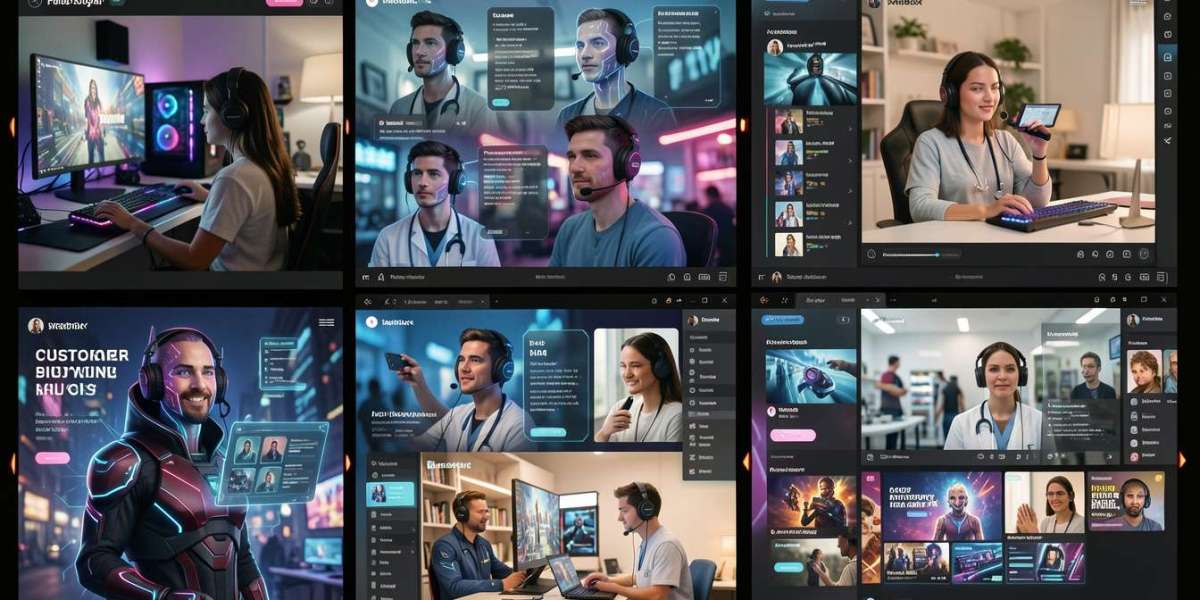
The Global Artificial Intelligence Avatar Market is rapidly evolving as organizations and consumers alike embrace AI-powered digital entities capable of mimicking human interaction, emotion, and behavior. AI avatars—virtual representations driven by machine learning, computer vision, natural language processing (NLP), and other intelligent technologies—are increasingly used in customer service, training simulations, digital assistants, entertainment, gaming, and personalized marketing scenarios. These AI avatars enhance engagement, simplify complex interactions, and create immersive user experiences, transforming the way businesses and end users interact within digital environments.
Market Overview
The Global Artificial Intelligence Avatar Market is estimated to be valued at USD 10.4 billion in 2025 and is further anticipated to reach USD 110.9 billion by 2034, exhibiting a compound annual growth rate (CAGR) of 30.1% during the forecast period from 2025 to 2034. Growth is propelled by rising demand for interactive digital platforms, increased adoption of AI-driven virtual agents, and growing applications of AI avatars in sectors such as gaming, entertainment, retail, healthcare, education, and customer support. AI avatars deliver scalable, personalized interaction that enhances digital engagement, reduces operational costs for businesses, and improves user satisfaction by providing real-time assistance and human-like communication.
Definition and Market Significance
Artificial intelligence avatars are digital personas or virtual representations powered by AI technologies such as machine learning, NLP, and computer vision that simulate human appearance, speech, gestures, and interaction patterns. These avatars can be interactive—engaging in two-way communication—or non-interactive, delivering pre-designed responses and actions. They serve as digital interfaces in virtual assistants, customer service bots, virtual influencers, gaming characters, and personalized educational tools. Their significance lies in their ability to automate routine tasks, personalize user engagement, and improve operational efficiency across industries by providing intelligent, real-time virtual presence that mimics human behavior.
The adoption of AI avatars reflects a broader trend toward digital transformation, personalized user engagement, and immersive technology experiences. Organizations implementing AI avatars are able to enhance customer satisfaction, streamline communication workflows, and differentiate their services in competitive digital landscapes.
Market Drivers
One of the key drivers of the AI avatar market is the rapid advancement in AI technologies, including NLP, deep learning, and computer vision, which enable avatars to understand and respond to human inputs with high accuracy and sophistication. These technologies support natural and intuitive interactions, making AI avatars valuable tools in customer service, virtual assistance, and digital engagement applications.
Increasing demand for automation and digital transformation across industries is another critical driver. Businesses are leveraging AI avatars to reduce operating costs, enhance customer support, and deliver 24/7 engagement without requiring human intervention. In addition, the rise of remote working, e-learning, and online collaboration has created new use cases for AI avatars as facilitators of virtual communication and intelligent assistance.
The expansion of immersive technologies, such as the metaverse and augmented reality (AR)/virtual reality (VR) environments, further fuels demand by enabling more realistic and interactive avatar experiences that bridge digital and physical interactions.
Market Trends
A significant trend in the AI avatar market is the increasing use of interactive digital human avatars, which capture the majority share of the market due to their ability to create deeply engaging, human-like interactions. These avatars are becoming more prevalent in customer service applications, virtual event hosts, and digital brand ambassadors that require natural conversation and real-time response capabilities.
Cloud-based deployment models are also gaining traction, supported by scalable infrastructure, remote accessibility, and integration with other enterprise systems and platforms. Cloud solutions enable businesses to manage AI avatars more efficiently, update functionalities dynamically, and support multi-location operations without heavy on-premises investments.
Artificial intelligence avatars are increasingly integrated with virtual agents and assistants, which represent the largest application segment, as they provide automated support, guidance, and interaction across customer touchpoints.
Market Restraints
Despite significant growth potential, the AI avatar market faces certain restraints. One key challenge is the complexity of developing highly realistic and contextually accurate avatars that can interpret nuanced human behavior and language in diverse cultural contexts. Creating such sophisticated models requires substantial investments in AI research, data processing, and computing power.
Data privacy and security concerns also limit adoption, particularly when AI avatars handle sensitive user information or interact with authenticated systems. Organizations must ensure compliance with data protection standards and build robust security frameworks to protect user privacy.
Interoperability with existing IT infrastructure can present another barrier, as integrating AI avatar platforms with legacy systems or enterprise databases often involves complex deployment and customization efforts.
Market Opportunities
The market presents substantial opportunities for innovation and expansion. Evolving technologies such as generative AI and multi-modal interaction capabilities (e.g., voice, gesture, and facial expression recognition) are expected to further humanize avatar interactions and expand their applicability across new domains. AI avatars tailored for healthcare, education, remote collaboration, and personalized marketing are emerging as promising application areas.
Emerging markets in Asia Pacific, Latin America, and the Middle East & Africa offer high growth potential due to increasing digital transformation initiatives, rising AI adoption, and expanding internet penetration. Developing localized AI avatar solutions for regional languages, cultural preferences, and context-specific applications can unlock new market opportunities and drive broader adoption.
Segmentation Analysis
The AI avatar market is segmented by avatar type, deployment mode, technology, application, and industry vertical. By avatar type, the market includes interactive digital human avatars and non-interactive digital human avatars, with interactive avatars expected to dominate due to their advanced engagement capabilities.
By deployment mode, segments include cloud and on-premises solutions. Cloud deployment is anticipated to maintain a leading position due to scalability, ease of integration, and lower upfront infrastructure costs.
Technology segments include artificial intelligence (AI), machine learning (ML), natural language processing (NLP), and computer vision, with AI-based avatars capturing a significant share due to their ability to deliver adaptive and context-aware interactions.
By application, the market covers virtual agents & assistants, virtual influencers, virtual characters, and virtual companions, with virtual agents & assistants expected to hold the largest application share.
Industry vertical segments include gaming and entertainment, healthcare, retail and e-commerce, education, BFSI, automotive, telecommunications, and others, with gaming and entertainment anticipated to dominate due to high demand for immersive avatar experiences in interactive media.
Regional Analysis
North America is expected to lead the Artificial Intelligence Avatar Market in 2025, with approximately 34.8% of total global revenue, supported by early adoption of advanced AI technologies, strong digital infrastructure, and presence of key technology players actively investing in avatar development. The region’s robust technology ecosystem and high adoption of interactive digital solutions reinforce market leadership.
Asia Pacific is projected to be the fastest-growing region, driven by rapid digital adoption, expanding technological investments, and increasing consumer engagement across digital platforms in countries such as China, India, Japan, and South Korea. The region’s growing tech-savvy population and supportive government initiatives further accelerate adoption of AI avatar solutions.
Europe also represents a significant market with steady growth supported by progressive digital transformation initiatives within enterprises and increasing integration of AI avatars in customer service and digital media applications. Latin America and the Middle East & Africa are expected to exhibit moderate growth, supported by expanding digital infrastructure and rising investment in AI technologies across key end-use sectors.
Download a Complimentary PDF Sample Report: https://dimensionmarketresearch.com/request-sample/artificial-intelligence-avatar-market/
Competitive Landscape
The competitive landscape of the Artificial Intelligence Avatar Market is characterized by innovation, strategic collaborations, and technological advancements. Key players in the market include Soul Machines, Synthesia, Hour One, Inworld AI, Replika, Ready Player Me, Didimo, ZMO.ai, Pinscreen, Unreal Engine (Epic Games), NVIDIA Omniverse, DeepBrain AI, UneeQ, Neon (Samsung STAR Labs), ObEN, D-ID, Tafi Avatars, AI Foundation, and Kinetix. These companies focus on enhancing avatar realism, integrating advanced AI capabilities, expanding platform compatibility, and entering strategic partnerships to broaden market reach.
Frequently Asked Questions
What is the expected market size of the Artificial Intelligence Avatar Market in 2025
The Artificial Intelligence Avatar Market is expected to be valued at USD 10.4 billion in 2025.
What CAGR is the market projected to register during 2025–2034
The market is projected to grow at a CAGR of 30.1% from 2025 to 2034.
Which region leads the Artificial Intelligence Avatar Market
North America leads the market with approximately 34.8% share in 2025.
What are the main applications of AI avatars
Major applications include virtual agents & assistants, virtual influencers, virtual characters, and virtual companions.
Which industry vertical contributes significantly to the AI avatar market
Gaming and entertainment lead due to high demand for interactive AI avatar experiences.
Summary of Key Insights
The Artificial Intelligence Avatar Market is poised for exponential growth, expanding from an estimated USD 10.4 billion in 2025 to USD 110.9 billion by 2034 at a CAGR of 30.1%. North America holds the largest regional share, while Asia Pacific emerges as the fastest-growing region. Interactive digital human avatars, cloud deployments, and virtual agents & assistants are key segments shaping market dynamics. The market’s evolution is driven by technological advancements, increased demand for personalized digital engagement, and broad adoption across diverse industries.
Purchase the report for comprehensive details: https://dimensionmarketresearch.com/checkout/artificial-intelligence-avatar-market/